VIETNAM: Pastors blamed for COVID-19 Outbreak

“Therefore encourage one another and build each other up,
just as in fact you are doing.”
(1 Thessalonians 5:11 NIV)

The Vietnamese government has accused a pastor couple of causing a major coronavirus outbreak and begun a criminal investigation into the activities of their house church, Revival Ekklesia Mission (REM).

Pastor Phuong Van Tan and his wife Pastor Vo Xuan Loan, and their son, daughter and son-in-law have all been hospitalised with the virus, and are further accused of not reporting their illness.

Health officials alleged that the couple allowed REM church members in Ho Chi Minh City to pray and sing without masks or proper social-distancing restrictions. They claimed they were able to trace a COVID-19 outbreak, which has since led to the city’s lockdown, to the church. This is despite the government banning meetings of more than 20 people since mid-May, the church gathering mostly online, and only seven people present in person at the meeting where the pastors purportedly contracted the virus.

The cluster of cases at REM church has coincided with outbreaks elsewhere in Vietnam and the discovery of a dangerous new variant of the virus that combines traits of the “Delta” and “Alpha” variants.

But the targeting of the church is clear. On 28 May, the Government Committee for Religious Affairs issued a bulletin requesting local authorities to specifically target house churches for inspection and education to do with COVID-19 regulations. On 30 May, REM church’s registration was “temporarily suspended.” Then on 1 June, local security police announced that the church was under criminal investigation for spreading COVID-19.

Christian leaders have responded by asking that the government show compassion to REM church and its members rather than hostility and persecution.

Christians in Vietnam fear that authorities are using the REM outbreak as a reason to impose extra restrictions on all religious bodies, especially house churches. Although authorities in Hanoi found that congregants at REM church’s two Hanoi branches tested negative for COVID-19, all religious gatherings in the capital have been forced to close with immediate effect.

From her hospital bed in Ho Chi Minh City, Pastor Loan has given her own account, which differs from some claims by the health officials. Though she had travelled to Hanoi before the meeting in question, she believes she contracted the virus only after her return from the capital, and was not the source of the cluster. She also denied that the congregation gathered without wearing masks.

“It is not true,” she said. “I am the one who always asked people from my church to wear a mask. I brought masks to all the people of the church and to people in the community.” Pastor Loan added that the church had received a donation of 2,000 masks that she distributed to church members and neighbours.

REM church was founded in the 1990s. As a small church in Vietnam, it joins the many others that have suffered harassment from the government. Vietnam is ranked 19th on the 2021 Open Doors World Watch List of countries where it is most difficult to be a Christian.

Home Group Prayer 

Heavenly Father, we come before you humble and ready to follow in your way. We are thankful that within this turbulent and challenging time you remain the same, yesterday, today and tomorrow. Thank you that we can bring our prayers and petitions to you, knowing that you hear us, and you care for each of us and our every need.

Lord! Today, we lift to you our brothers and sisters in Vietnam, and we think especially of Pastor Tan and Pastor Loan. Lord, would you heal them, their family, and church members fully from the virus. Please help them to have the courage to continue with their ministry in spite of the difficulties. We are so thankful for their hearts for you and we pray you encourage them in their work.

We pray also for the health officials and other government bodies. Lord, soften their hearts and turn them towards you. Lord, would you reveal yourself to the people of Vietnam, that they might know your love and your mercy.

Amen.

MALAYSIA: High Court rules that Christians can refer to God as ‘Allah’ in their worship

“May his name endure forever; may it continue as long as the sun.
Then all nations will be blessed through him, and they will call him blessed.”
(Psalm 72:17 NIV)

The High Court (third-highest in the land after the Federal Court and Court of Appeal) in Malaysia has overturned a ruling made in 1986 to prohibit the use of the word ‘Allah’ in any non-Muslim worship and literature.

This follows a lawsuit that was launched almost 13 years ago in 2008 when an indigenous Christian woman, Jill Ireland Lawrence Bill, had eight CDs confiscated on return to the country because  the name ‘Allah’ was contained in the recordings.

Jill Ireland’s lawyer challenged the confiscation as an infringement of “the fundamental freedom of religious rights for non-Muslims” enshrined in Malaysia’s constitution.

Christians in Malaysia mainly worship in English, Tamil or various Chinese dialects, and call upon God in those languages. However, for some Malay-speaking Christians living on the island of Borneo (which is divided between Malaysia, Indonesia and Brunei), the only word in their worship and literature for ‘God’ is ‘Allah’. Bahasa Malaysia is the Malay language used in Malaysia; Bahasa Indonesia is the variant used in Indonesia; in the latter, ‘Allah’ is an unproblematic term for ‘God’. It is from Indonesia that Borneo Christians obtain much of their Christian worship material and literature.

The word ‘Allah’ comes from Arabic, and Christian Malay speakers argue that they have used the word as far back as the 1600s in their Bibles, songs and prayers, long before the 1986 ruling. Malaysia is the only country to have banned the use of the word ‘Allah’ by non-Muslims; it is used in other Muslim countries which have a large Christian population, such as Indonesia. Jill Ireland had brought her CDs into Malaysia from Indonesia.

In the 1986 ruling, the Malaysian Home Ministry had prohibited the use of the word in any non-Muslim publications, along with three other words with Arabic origins. These were ‘Kaabah’, which refers to Islam’s holiest shrine in Mecca, ‘Baitullah’, meaning house of God, and ‘solat’, meaning prayer.

In the High Court’s overturning of the 1986 ruling, the judge stated that the Cabinet under the Prime Minister of the time, Dr. Mahathir Mohamad, had not in fact banned the use of the four words and that the Home Ministry had overstepped its authority. The Home Ministry had claimed that using ‘Allah’ would cause confusion among Muslims and could subsequently lead to conversion to other religions. Rather, the Cabinet’s policy recommendation had been to allow the word ‘Allah’ to be used in Christian materials as long as they indicate clearly that they are “Untuk Agama Kristian” (for the Christian religion).

In Malaysia, Muslims comprise around 61 percent of the population of more than 32 million, and Christians comprise around 13 percent.

Home Group Prayer

Dear Heavenly Father,

We thank you for the judgement made in Malaysia to allow Malay-speaking Christians to worship your Holy Name in the language of their choosing. We thank you that the religious freedoms enshrined in the constitution have been upheld and that your Name can be used in their Bibles, songs and prayers.

We pray for those around the world who are forced to worship your Name in secret. Please be with those who risk everything in order to share your Word and make your Name known to Christians and non-Christians in persecuted lands.

We thank you for our own freedom to worship you, and ask you to soften the hearts of those who persecute Christians wherever they are in the world, that they may know your redeeming love.

Through Jesus Christ our Lord,

Amen.


BANGLADESH: Church attacked by extremists and failed by police

“For the LORD knows the way of the righteous, but the way of the wicked will perish.”
(Psalm 1:6 ESV)

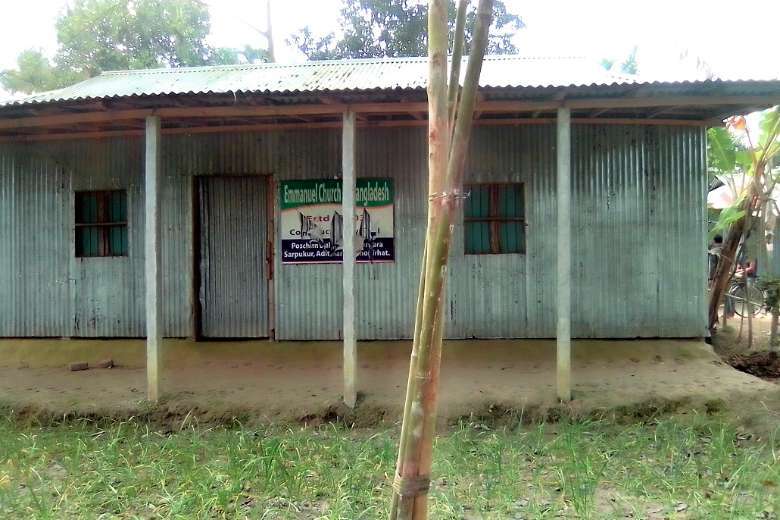
                                                                                                                                                         (Photo courtesy UCAnews)

Christians in Bangladesh have called on the government to protect them after a group vandalized and looted a church in the northern part of the country.  Pastor Lovlu S. Levy of Emmanuel Church in Aditmari upazila, Lalmonirhat district, which is the northernmost part of the country, said four men on motorcycles broke the lock on the church door, damaged the church’s sign, and cut down trees. They also took 30 chairs and two floor mats worth 14,000 taka (US$165).

Pastor Levy said this was not the first time he and the church had come under attack and received threats. He received death threats in 2015 from extremists and in 2019 a group attacked him on his way to church.

Bangladesh continues to wrestle with Islamist militancy, which has been on the rise since 2013. The church has traced the recent violence against Christians to a locally organized waz mahfil (religious discussion). The hate speeches that resulted against minorities, especially Christians, have been circulated on social media platforms, such as YouTube and Facebook.

Pastor Levy said he has been afraid since the attack took place and the 46 members of the church are also living in fear: “Our constitution allows freedom of religion in the country but fundamentalists have put the freedom under threat. The waz mahfil made various provocative statements about minorities and especially Christians, which encouraged the fundamentalists to attack our church.”

The church filed a complaint at the local police station, but the police have so far failed to take any action or arrest those involved. Instead, local Muslim leaders have accused the pastor of converting Muslims. The police have since dismissed the incident as a land dispute and denied the presence of any church, an officer even claiming there were no records or listing of the church in government documents.

The Bangladesh Christian Association rejected the claim, saying that they know the pastor and church well, and that they had provided blankets and some money for the church members before Christmas. The Association’s president, Nirmol Rozario, stated, “The incident is a result of the predominance of Islamic fundamentalists who want to intimidate Christians. The government must take proper action to stop such violence.”

Bangladesh is one of the world’s most densely populated countries, and has a moderate Muslim majority. The Christian population comprises less than 1 percent of the population, yet faces persecution from radical Muslim groups.

HOME PRAYER

Heavenly Father,

We ask for your blessing on the Christians in Bangladesh, and cry out in particular for the Emmanuel Church in Aditmari and their Pastor Levy. We ask that you protect them from further violence and attacks. We ask that they be left in peace to worship you without disturbance. We thank you for their songs of praise in your name in spite of the difficulties they face and their steadfastness in the face of suffering.

May your righteousness be an example for all in Bangladesh to put aside religious persecution and violence. We ask that the government of Bangladesh and local communities and the police take the necessary actions to protect the Christians of Emmanuel Church and all minorities in Bangladesh.

May we all pray for the Christians of Bangladesh and be emboldened by their courage to stand up ourselves for an end to religious persecution in Bangladesh and elsewhere in the world. Comfort the Christians who are fearful and keep them in the palm of your hand. May you guide us with your wisdom so that we may help persecuted Christians throughout the world to be able to worship you freely.

In Jesus’ name we pray.

Amen.

A prayer for those who intercede for our brothers and sisters who suffer for their Christian faith

“For the weapons of our warfare are not of the flesh but have divine power to destroy strongholds” (2 Corinthians 10:4 ESV)

illustration

DEVOTION: PRESSING THROUGH THE ‘BITTER’ (Rev 10:9-10)
– a prayer for those who intercede for Christ’s persecuted Church
by Elizabeth Kendal

Without a doubt, the message of the gospel (Good News) is sweet: ‘For God so loved the world, that he gave his only Son, that whoever believes in him should not perish but have eternal life. For God did not send his Son into the world to condemn the world, but in order that the world might be saved through him.’ (John 3:16,17 ESV). So too is the promise that this salvation will extend to the ends of the earth (e.g., Genesis 6:3Psalm 22:25-31, Isaiah 54:1-3, Habakkuk 2:14, Acts 1:8), reaching many tribes, peoples, nations, languages, and kings (Revelation chapters 5 and 10). Yet often it is the case that we joyfully ingest this gloriously sweet gospel, only to find it makes our stomach ‘bitter’: ‘If the world hates you, know that it has hated me before it hated you … Indeed, the hour is coming when whoever kills you will think he is offering service to God’ (from John 15:18-16:4). Yes, the sweetness of salvation is commonly followed by the bitterness of persecution. After all, both are integral to the cosmic spiritual battle (Ephesians 6:12) – a battle which Christ has already won (Colossians 2:13-15) and in which we are now ‘mopping up’ as Satan continues (to quote Jacques Ellul) ‘to resist his demise with the energy of despair’.

As Christians, we pray for God to send more workers into his harvest field (Matthew 9:37,38) and to bless all ministry and witness with effectual Holy Spirit power (1 Corinthians 4:20). We press through times of waiting as the soil (mission field) is weeded (to remove falsehoods), fed (with the blood of martyrs) and watered (with the tears of intercessors) that it might receive the gospel seed and yield a blessed harvest (Matthew 13). In love, we press on through frustration, spurred on by faith-fuelled hope rooted in the promises of God. ‘I will build my church, and the gates of hell shall not prevail against it.’ (Jesus, in Matthew 16:18). ‘Behold, all of [my adversaries] will wear out like a garment; the moth will eat them up’ (the Suffering Servant of Isaiah 50:4-9). So, no matter the circumstances, we just press on and pray for our missionaries, along with all who witness for Christ: may the Lord sustain them to just keep nibbling (like the moth) as he (the Lord) keeps building! [See: ‘Prayer Fuel from the Servant Songs of Isaiah’ http://www.elizabethkendal.com/ (tab: Devotions).]

No matter how sweet it is for us to hear stories of amazing conversions, we must always remember that, for many new believers, life is bitter. Indeed, conversion is where their battle begins! Rescued from the doomed kingdom of darkness, they are now free to live for God in the kingdom of light, except that they live behind enemy lines where the cost of discipleship is high. Maybe they live in North Korea, Saudi Arabia, Tibet, Afghanistan or Somalia where the church has been forced deep underground. Maybe they live on a spiritual front line where the battle is raging, such as in Egypt, Mesopotamia (Syria-Iraq) or the Caucuses (Armenia, Artsakh, Azerbaijan) where the world’s most ancient Christian peoples are under sustained attack. Maybe they live in a village in Northern Nigeria, India’s northern tribal belt, or a city anywhere in Iran where Satan is desperately fighting a losing battle to keep his disillusioned captives in! Or maybe they live in a household deeply hostile to Christianity; a household long captive to Islam, Eastern religion, or atheism and scientific materialism; a household into which our gracious Lord Jesus is reaching. Any believer who is truly engaged in the advance of God’s kingdom will find themselves continuously see-sawing between the sweetness of kingdom growth (which lifts us high and into the light) and the bitterness of persecution (which takes us into the darkness and drives us low).

Every day, faithful intercessors put on their armour and willingly enter that darkness precisely so they might pray for – that is, engage in spiritual battle on behalf of – Christ’s imperilled, persecuted, wounded Church. They enter that darkness voluntarily, precisely so they might see, listen to, understand, lift up and support their suffering brothers and sisters – God’s precious children, Church and bride – in their time of need. Filled as it is with greed, hatred, megalomania, war, lies, repression, persecution, and terrible suffering, that darkness is not a nice place. That said, Christ is there! Indeed, the darkness is where the Redeemer, Jesus the ‘true light’ who brings ‘grace and truth’ (John 1:1-18) does his greatest work. Furthermore, Jesus invites us, even implores us, to come and join him in his great redemptive work, a work that includes caring for and supporting his embattled persecuted Church (Hebrews 13:3). The only way to endure such a task, the only way to press on through the bitter, is to keep one’s eyes fixed on Jesus who has come and secured victory and trust that ‘all the promises of God [will indeed] find their Yes in him’ (2 Corinthians 1:20a ESV).

MY PRAYER FOR THOSE PRESSING THROUGH THE BITTER

I have prayed this for you.
I ask that you each might pray it for all our fellow intercessors.

Dear Father,

I bring before you all those faithful intercessors who willingly enter the darkness and press through the bitter precisely so they might intercede for and fight on behalf of your persecuted Church, which risks so much to live, minister, witness and shine there.

Driven by a deep love for your Church, a zeal for justice and a yearning desire to see ‘your kingdom come, and your will be done, on earth as it is in heaven’, they voluntarily subject themselves to the worst of news comprising all the ugliest aspects of fallen humanity. For the sake of your Church, and so they might intercede, they resist the seductive lure of ‘blissful ignorance’ and ingest news of repression, incarceration, abuse, assault, rape, abduction, torture, murder, massacre, genocide, abandonment and seemingly endless injustice. It is a critical and strategic ministry; but it can bring intercessors low and make their stomachs bitter.

Father, it is with this in mind that I pray for every intercessor: may the Holy Spirit be so powerfully at work within each one that love, and faith-fuelled hope rooted in the promises of God, will always prove greater than any despair or hopelessness Satan – ‘the father of lies’ (John 8:44) – might wish to fire into their hearts (Ephesians 6:16).

May prayer for the persecuted continue to grow as God knits together his increasingly global Church using chords of love forged in the flames of persecution, in answer to the prayer of our Lord which he prayed in the garden: that we might be one, that the world might believe (John 17:20-23).

AMEN

“But this I call to mind, and therefore I have hope: The steadfast love of the Lord never ceases; his mercies never come to an end; they are new every morning; great is your faithfulness”(Lamentations 3:21-23 ESV)


LAOS: Seven who refused to recant their faith in Christ have been evicted from their village

Afterward Moses and Aaron went and said to Pharaoh, “Thus says the LORD, the God of Israel, ‘Let my people go, that they may hold a feast to me in the wilderness.’”  (Exodus 5:1 ESV)

Seven Christians in southern Laos are now living in the forest after refusing to recant their faith. Local authorities evicted members of two families from the village of Pasing-Kang in the Ta-Oesy district in southern Salavan province on 10 October. The village authorities have banned relatives and others from helping them as they struggle to survive. Even family members say they are too scared to help and fear they too will be forced out from the village if they do so.

A Lao Front for the National Construction (LFNC) official from the province said he was waiting for information about the case. “Things have been quiet,” he said. “Their religious leader just came here and spoke with the Office of Religious Affairs.” The Lao Evangelical Church (LEC) is closely monitoring the situation and trying to find a solution to the unfair treatment.

Meanwhile, four Christian men have been languishing in jail for months for wanting to hold a Christian funeral, which officials said would have violated local customs and traditions. The four were detained in early July in Khammouane province after they travelled to a village to participate in the last rites for a deceased fellow believer.

Last year, the government approved the Constitution of the LEC, which allows Christians the right to conduct services and preach throughout the country and to maintain contact with other believers. Last month, the LEC together with the Interior Ministry and the LFNC held seminars in Bolikhamxay, Bokeo and Savannakhet provinces to inform rural authorities on the new law, with similar meetings planned in other areas.

Although the number of people arrested in Laos for following Jesus has decreased in recent years, cases of abuse are still reported in remote rural areas. Most Laotians view Christianity as a Western religion. Many also believe Christians anger the spirits when they refuse to participate in village rituals. House churches and church buildings exist, but the vast majority do not have a trained pastor. In most villages, no church buildings are allowed. If village leaders notice that a house church is growing, they will try to stop it. Christians often are unable to get jobs, most of which are through the government, and they commonly are denied medical treatment, education and other social services. There are no open Bible schools in the country.

Home Group Prayer

Heavenly Father,

We thank you for all the times you have rescued and comforted your people when they have been cast into the wilderness. We pray for these seven Laotians who because of their faith have been cast into the forest and need to rely on you to survive. We pray that notwithstanding people not being able to help them, you will provide them with the sustenance they need to survive and thrive in the forest. We give thanks for the strong faith these people have in you in order to be willing to suffer in your name. We pray that their example will be an encouragement to others. We pray also for their families and friends who live in terror and are afraid for these seven Christians. Please provide them the strength they need in facing persecution.

We pray as well for the four men still in jail as a result of wanting to hold a Christian funeral and the many other victims of religious persecution in Laos. We pray for the Lao Evangelical Church which is doing its best to assist these Christians. May their efforts at spreading your word be successful. We pray for all the pastors and believers who in spite of the trials they face are willing to stand up and proclaim your name. We pray that the Lao Evangelical Church will be successful in its efforts at making the governmental authorities in Laos stop hostile actions against Christian believers in Laos and permit true religious freedom to take place.

We pray that particularly in this difficult economic environment owing to COVID-19 that Christians will be able to get jobs and will receive the necessary medical treatment, education and other social services they require. We know that while we may need to live in the wilderness for a while, you will eventually bring us to glory. We give thanks for your Son, Jesus Christ and the Holy Spirit who sustain these seven Christians and all the others suffering persecution in Laos and elsewhere in Asia and the world. May we pray for them and pray for the church in Laos and pray that your justice will prevail.

In Jesus’ name, amen.

INDIA: Funding licences suspended in fresh assault on Christian organisations

“God is our refuge and strength, an ever-present help in trouble. Therefore we will not fear, though the earth give way and the mountains fall into the heart of the sea, though its waters roar and foam and the mountains quake with their surging.”
(Psalm 46: 1–3)

India’s Ministry of Home Affairs has suspended the Foreign Contribution (Regulation) Act (FCRA) licences of six non-governmental organisations (NGOs).

The FCRA licence is required to receive donations from abroad. While an NGO’s funding is being investigated, it is not allowed to receive any foreign donations and its bank account is also frozen. This suspension of FCRA licences therefore effectively cuts off an NGO from any overseas-based financial sources for an indefinite time.

Four Christian charities have been affected: Ecreosoculis North Western Gossner Evangelical in Jharkhand, New Life Fellowship Association in Mumbai, Northern Evangelical Lutheran Church in Jharkhand, and the Evangelical Churches Association in Manipur. The reason for the suspension of their licenses has not been specified, but may be due to reports that the NGOs seek to proselytise locals.

This is not the first time that Christian charities have faced the cessation of funding from abroad. In 2017, the US-based donor Compassion International had to cease activities in India because it was deemed to fund NGOs encouraging religious conversions. It had been the biggest donor to India amongst charities. Since then, attacks on Christians and Muslims have increased and India is now tenth on the World Watch List of Open Doors, which assesses the most difficult places to be a Christian.

In the first six months of 2020, 135 cases of assaults against Christians were reported in India. The cases included physical violence, harassment and threats, as well as false accusations which have led directly to the arrests and imprisonment of Christians.

Most disturbingly, three Christians are reported to have died in India in the first half of 2020 because of their faith, according to a July 2020 report by the Religious Liberty Commission of the Evangelical Fellowship of India.

The Indian government led by Prime Minister Narendra Modi has been criticised for using the cancellation of FCRA licenses as a means to silence Christian charities that speak out about the social costs of economic development in India.

Since Modi took the helm in 2014, a total of 15,000 foreign NGO licences have been revoked. In November 2016 alone, the Ministry of Home Affairs rejected the licence renewals of 25 charities, including those working on human rights, with the alleged cause being that these NGOs were deemed to be “anti-national”. In early September 2020, the Modi government tabled changes to the FCRA that would impose further restrictions to stifle foreign donations from critics of the government.

Home Group Prayer

Dear Lord and Heavenly Father,

We pray at this time for Christians in India who face persecution: for those who are attacked both physically and verbally, for those who are falsely accused and imprisoned, and for those who are forced to flee from their homes.

We also pray for those charities who are working in India, that they may be allowed to work peacefully and for the common good, to benefit the poorest and most socially disadvantaged in society. We pray for them to have the courage to speak out against social injustice even when pressure is put on them to stay silent.

Lord, we pray for those who are persecuting Christians in India, that you may soften their hearts and open their eyes to your redeeming love.

Through Christ our Lord, Amen.

LAOS: Persecution continues despite government approving church activities

“If you are insulted because of the name of Christ, you are blessed, for the Spirit of glory and of God rests on you. … if you suffer as a Christian, do not be ashamed, but praise God that you bear that name.”
(1 Peter 4:14, 16)

The Lao government has approved the constitution of the Lao Evangelical Church (LEC), in effect giving its churches the freedom to share the gospel freely in the country.

The Minister of Home Affairs signed the document, which includes a statement that church workers have the right to travel, meet together for worship, and evangelise non-Christians. According to Stand Asia’s sources, since the document includes the statement that evangelisation is part of the churches’ mandate, the authorities should not stop Christian meetings or arrest believers for sharing the gospel. The impact of this document is likely to be freedom to believers and transformation of the lives of many Christians.

The LEC president has started meeting provincial officials and local Christian leaders in each of the provinces to explain the LEC constitution and its significance.

Nevertheless, Lao authorities continue to persecute and arrest believers on flimsy charges. According to reports, officials are twisting a number of issues to make Christians look bad. The police have also apparently threatened to arrest all Christians.

In early August, police arrested Grandfather Ter in May district, Phongsaly province and prohibited him from sharing the gospel. Grandfather Ter is the first Akha to be arrested by the police for his Christian faith. The oldest of three brothers who returned to their village after detox and rehab, he was the first among them to turn to the Lord. This is the first arrest of a believer among the Akha people, so it’s a potentially critical time for God’s people in their area.

There have been other such incidents. On 17 August, police arrested Achan Bounkeo when he went to the market to buy lunch. On 3 July, police arrested four Christian leaders in central Laos, because they conducted a Christian funeral in a mainly spirit-worshipping village. The authorities took them to the district prison and later transferred them to the provincial town prison. Local Christians cannot visit them but can take food to them. On 15 March, a detained Christian pastor was sentenced to six months in prison. This prison term is likely to end in mid-September.

Laos has imposed tight border controls to restrict the spread of the coronavirus. Many Christian expatriate workers have not been able to return to Laos because of travel restrictions.

Christians make up just three percent of the population and are a small minority. Christianity, in particular, is considered a Western influence and especially dangerous. Conversion to Christianity can be seen as a betrayal to the family and Lao culture. Despite setbacks and ongoing persecution, the Lao church continues to grow at a purported six percent every year.

PRAYER POINTS

  • Pray for the LEC president, as he meets local officials and Christian leaders to explain the government-approved LEC constitution and its significance. Pray that the meetings will have a deep impact throughout the country.
  • Pray for arrested Christians and their families, including Grandfather Ter, Achan Bounkeo, the four Christian leaders arrested in central Laos, and the Christian pastor sentenced to six months in jail. Pray for strength and wisdom for them to face and respond to their situations.
  • Pray for believers among the Akha in the May district of Phongsaly province. May God strengthen the believers in this time of trial and the authorities come to know God through the testimonies of these believers as they stand firm.
  • Pray for Christian expatriate workers who have not been able to return to Laos because of travel restrictions due to COVID-19.


LAOS: Pastors and others arrested on faith-related charges

“Who shall separate us from the love of Christ? Shall trouble or hardship or persecution or famine or nakedness or danger or sword? As it is written: ‘For your sake we face death all day long; we are considered as sheep to be slaughtered.’ No, in all these things we are more than conquerors through him who loved us. For I am convinced that neither death nor life, neither angels nor demons, neither the present nor the future, nor any powers, neither height nor depth, nor anything else in all creation, will be able to separate us from the love of God that is in Christ Jesus our Lord.”
(Romans 8:35–39)

Life for Christians under the communist regime in Laos is very tough. The Open Doors estimate of 227,000 Christians in a country of over 7 million face frequent persecution, including forced conversion and imprisonment. According to accounts from believers in Laos, the threats come in the form of community pressure, including from family members, and institutional forms of discrimination from the state and other authorities.

On 15 March, Pastor Sithon Thipavong was arrested for holding a worship service in his village home and was subsequently imprisoned for this offence. It is said that he has led over 400 people to faith in the last year.

On 24 May, a case of family conflict occurred at a church near the capital city, Vientiane. Two brothers, Chan and Huang, were attending a church service when their father burst in, swearing at and threatening them. He demanded that they renounce their faith and sent them away, after which they ended up at their pastor’s home. However, the boys are now back home with their father because of the rice-planting season.

It has also been recently alleged that authorities have arrested four individuals for their faith, including a pastor in Bolikhamsai province in central Laos. This is not the first time that the pastor has been arrested for this reason. This time, it appears that the pastor was conducting a Christian funeral when the authorities arrived and tried to force the congregation to sign documents recanting their faith in Jesus. After refusing to do so, the pastor and three other leaders were taken to the district jail, where they remain.

Home group prayer

Lord Jesus, we give you thanks for your faithful servants in Laos. We give you thanks for their steadfast commitment to you through all circumstances.

We pray today for each and every individual in Laos who has accepted you as Lord and Saviour. Might they know that you are with them in the valley, that you go before them, and that you will never leave them nor forsake them.

Lord, we pray especially for the leaders of your church in Laos. Be with them today. By the power of your Holy Spirit, remind them that their life gives you glory and their labour is not in vain. In particular for Pastor Sithon and other church leaders arrested across Laos, may they know today the comfort and peace that can come only from you. We think of their families who anxiously await their return and pray for justice in this situation.  We lift up to you the police, politicians and all those involved in the justice system — we pray that the faith of our brothers and sisters will shine as a light and change hearts and minds for you.

Lord, we gave you thanks that you know the names of every man and woman suffering for your name’s sake in Laos — you know them and you love them. Lord, we pray that this truth will be written on their hearts today and will give them joy amidst the pain.

In the name of your Son, we pray.

Amen.

MALAYSIA: Inquiry into disappearance of Christian couple to resume

“The Lord is my rock, my fortress and my deliverer; my God is my rock, in whom I take refuge, my shield and the horn of my salvation. He is my stronghold, my refuge and my saviour — from violent people you save me.”
(2 Samuel 22:2–3)

The NGO Human Rights Commission of Malaysia (aka Suhakam) is to resume its inquiry into whether the 2016 disappearance of Pastor Joshua Hilmy and his wife, Ruth Sitepu, was an “enforced disappearance” — that is to say, whether state agents were involved in abducting them.

The family of Ruth said they were encouraged by Suhakam’s commitment to the inquiry: “This public inquiry is our hope of finding our sister Ruth and brother-in-law Joshua.”

Joshua, a Malay from Taiping, Perak who converted to Christianity from Islam, and Ruth, a Batak Christian from Indonesia, were last seen on 30 November 2016 and reported missing on 6 March 2017. The inquiry resumes as their families fear that the government has been delaying efforts to uncover the truth.

Suhakam commissioner, Jerald Joseph, said that they would finalise the dates for the inquiry’s resumption with stakeholders and lawyers after confirming the easing of restrictions enforced in March because of the COVID-19 pandemic. He added that they had planned for 15 days for the inquiry, but this was an estimate that depended on how the inquiry developed.

Before it was postponed because of the restrictions, the inquiry had heard from a witness that the couple were intending to flee the country after receiving threatening phone calls and emails over Joshua’s alleged preaching of Christianity to Muslims and baptizing those who convert. The inquiry also learnt that Hilmy had been baptizing converts since 2011, usually in bathrooms using a showerhead and once in a pond.

Muslim citizens of Malaysia are prohibited from converting to other religions unless they receive the consent of a Shariah court. Islam is the country’s official religion.

Suhakam commissioned a similar inquiry to probe the separate disappearances of Pastor Raymond Koh and social activist Amri Che Mat. They reported their findings in April 2019 — both men were victims of enforced disappearances. They had been abducted by the Special Branch, an intelligence unit of the Royal Malaysia Police.

Suhakam said it was likely that Joshua and Ruth had disappeared for the same reason. Police have denied this allegation.

More than 9 percent of Malaysia’s population of 31.5 million are Christians.

Home Group Prayer

Dear Heavenly Father,

These are difficult times, Lord, even for those of us who are free to worship you without persecution. How much more do your sons and daughters suffer for you in countries like Malaysia, where they must endure bias, hatred, violence and even abduction and death at the hands of those who do not know you.

Lord, we ask you give your faithful in Malaysia an extra dose of your divine peace, strength, fortitude, grace and love to withstand the onslaught of these spiritual, emotional and physical slings and arrows. Lord, endow them with supernatural capacity and ability to stand up to their attackers, knowing you are there with them, Lord, and you are their eternal refuge and fortress and saviour.

Lord, we also ask you touch the hearts of the persecutors, that the scales might fall from their eyes, that they might see you through those they persecute and be convicted of their sinful ways, and cry out and fall to the ground worshipping you as the One True God. And unite this divided land as only you can, oh God.

In Jesus’ name we pray. Amen.

PAKISTAN: CHURCH VANDALIZED IN LAND DISPUTE AGAINST CHRISTIANS

“Why do you look with hatred, O many-peaked mountain, at the mount that
God desired for his abode, yes, where the LORD will dwell forever?”
(Psalm 68:16)

A group of armed men in Pakistan vandalized a church in Punjab province in early May.  Police said the group desecrated a cross and demolished the gate and boundary wall of the church in Kala Shah Kaku town, some 40 km from Lahore, the provincial capital. The alleged cause was a land dispute — the group told Christians to vacate the church land, claiming it belonged to them.  Church leaders lodged a police complaint following the incident.

The incident occurred as the independent Human Rights Commission of Pakistan pointed out in their 2019 annual report that Christians have continued to suffer forced conversions and persecution under the country’s blasphemy law.  The report noted particular cases of forced conversion in Sindh and Punjab provinces.  In Punjab, 14-year-old girls had been forced to convert and to marry.  In Sindh, the families of two Hindu girls claimed they had been kidnapped for marriage and forced conversion.  According to human rights NGO International Christian Concern, at least 50 Christian women and girls faced this issue in 2019.

The ongoing coronavirus pandemic has not reduced discrimination against Christians in Pakistan.  Authorities have apparently denied food supplies to them by claiming they were meant for Muslims.

Christians in Pakistan often face religious hatred and discrimination.  The country’s blasphemy law is controversial because it is often used to persecute Christians and other religious minorities, with consequences for their places of worship and residential areas. Blasphemy against prophets of Islam is a capital crime in Pakistan.  According to Open Doors, a mission supporting persecuted believers, Pakistani Christians are afraid to express their faith freely in case something they say is interpreted as blasphemy.  False accusations of blasphemy have led to imprisonment or even killings.

Christians constitute around two percent of the population in Pakistan.  Christian communities remain among the poorest sections of society, often do menial jobs, and are regarded as second-class citizens.  Three cities, Karachi, Lahore and Faisalabad, have large Christian populations.

Pakistan is currently fifth on the World Watch List, an annual report by Open Doors.  It is considered a country where extreme persecution of Christians takes place.

HOME PRAYER GROUP

Heavenly Father,

We ask your blessings for the people of Pakistan and especially for Christians who are suffering from persecution there. We pray for the church in Kala Shah Kaku and its pastor and congregation.  May they be strong when faced with violence.  We pray for those imprisoned or suffering unjustly from the blasphemy law. We pray that you will help the people who practise violence to see the light and that way is not the answer. We pray that your Holy Spirit will descend on this community and all of Pakistan and cleanse it of religious and other persecution.

Especially in these times of the coronavirus, we pray that people will come together rather than pull apart. We need your spirit of peace and strength to get through these difficult times. We pray that your Holy Spirit will help the government and people of Pakistan turn it into a country where extreme persecution no longer exists. We pray that all will work together in peace and harmony to deal with the coronavirus and all the other ills which affect the country.

Watch over your flock in Pakistan and bring them safely to a land of peace and harmony.  May your Spirit comfort them and keep them safe from persecution and the coronavirus. We need your help and guidance in all we do.

In Jesus’ name we pray. Amen.