Afghanistan: A light shines in the darkness


“WEEPING MAY ENDURE FOR THE NIGHT, BUT JOY COMES IN THE MORNING.”

(PSALM 30:5 NKJV)
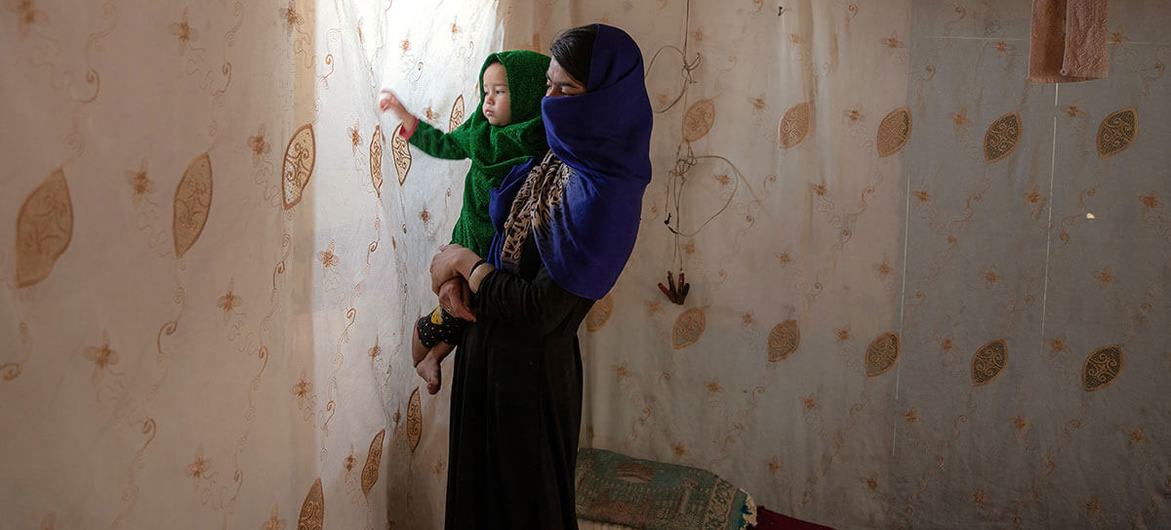
 

Three years after the Taliban took over the country, the economy is collapsing, international assistance has virtually dried up, and there is growing dissatisfaction among the people. The Taliban continue to persecute Christians and are singling out women and girls. In August, they issued a strict public morality law completely prohibiting women from speaking, singing or praying aloud in public. The law is an attempt to literally silence women and erase them from view.

Women have also been ordered to cover every part of their body and face and be escorted by a man in public. Dozens of women have been arrested in the streets of Kabul and taken to unknown locations. To be a Christian woman in Afghanistan would almost certainly incur the death penalty. Afghanistan is now the only country in the world to ban girls from both secondary school and university.

The Taliban set about enforcing a strict interpretation of Sharia law after seizing power in 2021. They banned conversion from Islam to Christianity and began hunting down anyone suspected of being a Christian. Christians who converted from Islam were reportedly arrested, tortured, and even executed. Christians left the country, while others went into hiding. There were fears that there were no believers left in the country.

But today, in the midst of this grim situation, there is hope. Many Afghans who fled to neighbouring countries are being repatriated and returning with a new-found faith in Christ. These new believers are forming tiny communities across the country and are meeting in secret. They are starting from scratch, much like the early church did in the first century, strengthening their faith in the face of severe persecution and suffering.

At the same time, the Taliban have been working to erase Christianity from the country and are using advanced surveillance technology to monitor communications. Despite the risks, the new Christian communities are finding ways to worship, share the gospel, and support one another in the hostile environment.

Muslims account for 99 percent of the population of Afghanistan, with the vast majority practising Sunni Islam. There are no public Christian churches. According to Open Doors, Afghanistan is ranked as the world’s 10th worst persecutor of Christians.

This Advent and Christmas, Afghanistan’s Christians remind us that even in the most oppressive circumstances, the light of Christ cannot be extinguished. Their journey is perilous, but their faith is strong. And it is in Christ that we find hope — not just for the future of the church in Afghanistan, but for all of us who believe in the power of the gospel to transform lives, even in the darkest of times.

Let us stand with our brothers and sisters in Afghanistan and pray for them.


Home Group Prayer

Dear God, our Father,

We lift up our brothers and sisters in Afghanistan. We especially lift up our sisters who live there in fear and anxiety about their safety and that of their families. In the midst of all the trials and oppression, we thank you for the amazing evidence of your presence there.

We pray for the government in Afghanistan, and ask that your light may shine there too. Please open their eyes to the plight of their people and fill them with compassion for them. We ask that they too would know the grace and freedom that come from you.

Thank you for the amazing ways in which you manifest your presence there. Please continue to visit people in dreams and visions, and reveal yourself in other miraculous ways. We pray for the coming down of barriers — spiritual, political, social — for nothing is impossible for you. Thank you that you love the people of Afghanistan and desire them to live in the hope and freedom that comes from you.

We ask these things in the name of Jesus.

Amen.
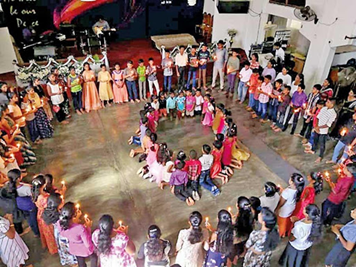
THE NEW PRESIDENT OF SRI LANKA HAS VOWED TO INVESTIGATE THE 2019 EASTER SUNDAY BOMBINGS

“But let justice roll on like a river, righteousness like a never-failing stream!”

(Amos 5:24 NIV)


On Easter Sunday 2019, three churches and three luxury hotels in Sri Lanka were bombed in a series of coordinated attacks that claimed 279 lives. Despite investigations and civil lawsuits, the perpetrators of these attacks remain unidentified.

The Archbishop of Colombo, Cardinal Malcolm Ranjith, met with new President Anura Kumara Dissanayake and urged him to re-open investigations into this matter. On 6 October, President Dissanayake personally visited St. Sebastian’s Catholic Church in Negombo city, where 116 people were killed. The president pledged to the congregation that his government would conduct a fair and transparent investigation.

Subsequently, on 8 October, the government announced a new probe on the basis that previous investigations had failed to identify the culprits responsible for the country’s worst-ever attack against civilians.

The tragedy of these attacks is still deeply felt by many in the Christian community of Sri Lanka. At Zion Church in Batticaloa city, one bomb exploded just before the Easter service was to begin. At least 26 were killed and more than 100 were wounded. The 14-year-old son of Ganeshamoorthy Thirukumaran, a pastor at the church, were among 14 children and teenagers who died in the bombing.

Survivors of the attacks and their families continue to live with the trauma from these events and have persisted in demanding justice. The Catholic church has been at the forefront of this call for an independent investigation and the involvement of the international community. Father Cyril Gamini Fernando, head of the Communications Committee of the Archdiocese of Colombo, expressed the expectation that the new government would be taking action based on the findings of this new probe.

Overall, more than 500 people were wounded in the bombings, including 45 foreigners. Initially, officials blamed a local jihadist group connected with ISIS for the suicide bombings. However, many believe that there may also have been political motivations that allowed the attacks to take place.

Sri Lanka’s former intelligence chief, Suresh Sallay has been accused of involvement. Last year, the Supreme Court fined then-President Maithripala Sirisena and four senior government officials 310 million Sri Lankan rupees (approximately US$1.06 million) in a civil case for their failure to prevent the attacks.

In the meantime, Christians in Sri Lanka continue to face persecution at the hands of Buddhist and Hindu groups. One incident reportedly involved Buddhist groups throwing stones at a church in Kurunegala district, damaging the property. Local villagers also blocked the road leading to the church, preventing church members and the pastor from passing through. In 2023, 43 cases of intimidation and violence against pastors and their congregations were documented by the National Christian Evangelical Alliance of Sri Lanka (NCEASL), claiming that Buddhist groups obstructed worship services and were responsible for discriminatory actions and attacks on churches.


Home Group Prayer

Dear Lord,

We pray for our brothers and sisters in Christ living in Sri Lanka. We pray for your blessing and protection over them. Give them strength, faith, and hope in the face of persecution and allow them to live and worship freely and safely in their communities.

We also pray for the victims and families of the victims of the 2019 attacks. We ask that the new government of Sri Lanka will conduct a thorough investigation into these events in order that those responsible may be brought to justice.

We ask this in Jesus’ name.

Amen.

CHRISTIANS ATTACKED IN BANGLADESH AMID POLITICAL UNREST

“IF YOU ARE INSULTED BECAUSE OF THE NAME OF CHRIST, YOU ARE BLESSED, FOR THE SPIRIT OF GLORY AND OF GOD RESTS ON YOU.“  

(1 PETER 4:14 NIV)


In Bangladesh, two Christians were beaten and detained by police during a recent escalation of violence against believers. This incident occurred on 5 September during a visit to a local house church that was invaded by a mob. Their aggression was focused on one of the Christians, who was interrogated on whether he was a former Muslim. When he could not provide a definitive reply, the mob leader called the Christian’s wife to get an answer.

Police intervened but detained the two Christians overnight without medical treatment for their injuries. One has since been released on bail but is left traumatized, while the status of the other remains uncertain. Christian leaders are actively seeking ways to support the victims and are calling for prayers during this difficult time.

Nobel laureate Muhammad Yunus, the Chief Adviser of the interim government that took over from Prime Minister Sheikh Hasina, has made assurances that no one would face discrimination based on religion or political beliefs. However, attacks on churches and minority communities have surged since PM Hasina’s dramatic resignation and departure from the country on 6 August after an anti-government movement by millions. Extremists targeted converted Christians and other minorities, leading to widespread violence, including attacks on churches and the homes of believers.

Reports indicate that tribal homes belonging to Santal Christians in Dinajpur and Rajshahi were attacked, with a church vandalized in Narayanganj. The Bangladesh Hindu Buddhist Christian Unity Council stated that hundreds of families were affected, with some receiving death threats. In Khulna, the offices of Caritas, the Catholic relief and development agency, were attacked, and a Catholic diocesan building in the capital, Dhaka, was ransacked and set ablaze, alongside numerous Hindu homes and temples.

Although the situation has since improved, Christians continue to live in fear due to sporadic incidents of violence across the country. Many are praying for protection and healing. As one leader expressed, “My people are grieving.”

Bangladesh ranks 26th on the 2024 Open Doors World Watch List, indicating a high level of persecution for converts.

** Prayer Requests **

– For the safety of believers and other religious minorities, and an end to the ongoing persecution

– For comfort and protection for those affected by the unrest, seeking God’s provision and hope

– For healing and restoration for victims of violence, along with strength and wisdom for local partners aiding them

– For transformative encounters with Jesus for those hostile to Christians

Catholic bishops meet with Prime Minister Modi to express concerns over the treatment of Christians in India

“IF INIQUITY IS IN YOUR HAND, PUT IT FAR AWAY, AND LET NOT INJUSTICE DWELL IN YOUR TENTS.”

(JOB 11:14 ESV)

On 12 July, a four-member delegation from the Catholic Bishops’ Conference of India (CBCI) met with the newly re-elected Prime Minister Narendra Modi in New Delhi. Led by Archbishop Andrews Thazhath, they voiced the concerns about the treatment of Christians in India.

During the 45-minute meeting, the group requested Prime Minister Modi to intervene to stop the hostility and harassment of Christians. They presented him with a memorandum outlining the false allegations of forced conversions as well as the misuse of anti-conversion laws against Christians.

As Prime Minister Modi is the leader of the Hindu nationalist Bharatiya Janata Party, the delegation expressed concerns that, in parts of the country, hardline Hindu groups have been misusing the anti-conversion laws to file false complaints against Christians.

In 2023, local police in Uttar Pradesh arrested a Christian man, Kailash, and charged him with converting several people to Christianity. In early July this year, a High Court judge denied Kailash bail and ruled that conversions of this nature are contrary to Article 25 of the Indian Constitution that protects freedom of conscience and free profession, practice, and propagation of religion, but not religious conversion.

Such a ruling potentially places many pastors and congregations at great risk if they are seen to be preaching to and converting non-believers.

The CBCI memorandum also reiterated the Catholic Church’s request that special benefits that are offered to the Dalit people be offered to Christian Dalits as well.  The benefits include financial aid and inclusion in quotas for government jobs and educational institutions. However, Christian along with Muslim Dalits have long been excluded from receiving these benefits, based on the argument that Christianity and Islam do not follow the caste system.

By denying Christian Dalits the same benefits as other Dalits, the government is essentially creating a disincentive for Dalits to choose to be followers of Christ.

Some Hindu groups have even called for tribal Christians to stop receiving other special government benefits. The memorandum addressed this issue and urged Prime Minister Modi not to surrender to these demands. The absence of Christian representation on many government committees for minority groups was also noted and concerns over challenges faced by Christian NGOs when renewing their registration were expressed.

Finally, the CBCI urged Prime Minister to expedite the process of arranging Pope Francis’s visit to India. Prime Minister Modi met the Pope at the Vatican in June and invited him to India. The CBCI felt that the papal visit might serve to improve the situation of Christians in India.


Home Group Prayer

Dear Lord,

We pray for the Christians living in India, that they may be protected and spared from injustice. We pray that you will give wisdom to all government officials and authorities in India, so that they will always seek to enact the laws justly and fairly and not discriminate against your people. We thank you that the Catholic bishops were given an audience with the prime minister and we pray that their words and appeals will be heard and acted upon. Give strength, wisdom, guidance and protection to all those working to defend the rights of Christians in India at this time.

We ask this prayer in Jesus’ name.

Amen.

Pakistan: Plea for Protecting Christians against Blasphemy Law

“No, in all these things we are more than conquerors through him who loved us. For I am sure that neither death nor life, nor angels nor rulers, nor things present nor things to come, nor powers, nor height nor depth, nor anything else in all creation, will be able to separate us from the love of God in Christ Jesus our Lord.”

(Romans 8:37–39 ESV)


Pakistan’s National Assembly (NA) has passed a resolution condemning the recent mob-lynchings of Christians in the country. The NA urged both federal and provincial governments to ensure the safety and security of all citizens, including Christians.

The Federal Minister for Defence, Khawaja Asif, stated that the rising incidents of violence against Christians in the country was an embarrassment: “We must ensure the safety of our minority brothers and sisters. They have as much right to live in this country as the majority.”

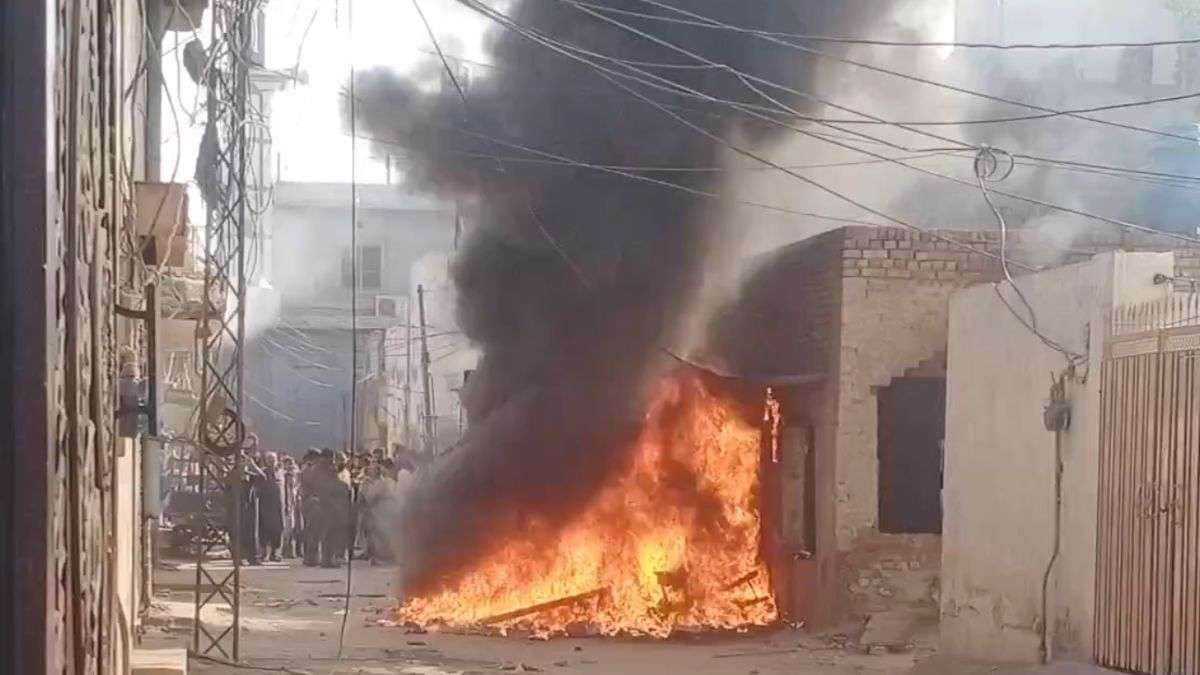
The statement comes after radical Islamists led a mob that ransacked shops owned by Christians in Punjab province on May 25, using allegations of desecration of the Quran. The mob singled out a Christian man, Nazir Gill Masih, brutally attacked him and his family and burned down his factory.

Masih was hospitalised in critical condition and later succumbed to his injuries. Many Christian families managed to escape the mob by locking themselves inside their houses. Police have registered a case against more than a hundred people.

In 2023, the NA voted to increase the punishment for blasphemy offences from three to at least ten years of imprisonment. That year, thousands of rioters had burned 400 homes and 26 churches using fabricated allegations of blasphemy, sending Christian villagers fleeing for safety. Experts say the country’s strict blasphemy law is often abused to intimidate Christians and other minority groups and to settle personal scores. Blasphemy is punishable by death in Pakistan.


Home Group Prayer

Dear Lord,

We thank you for the country of Pakistan and lift it up  to you, especially your people there who live in fear and insecurity. May the light of your glory fill this nation and turn hearts to you. Reveal yourself to people in dreams and visions, so they come to know your love.

We especially lift up the problem of Pakistan’s blasphemy Law. We ask that it be changed or abolished and that people would not misuse it for personal gain. May believers there know your presence and claim your promises to never leave them nor forsake them. Please be near to those who are suffering and in prison. Be their hope and their comfort.

We commit Pakistan into your hands, and pray for your hedge of protection around our brothers and sisters there.

In Jesus’ name.

Amen.

Laos: Christians continue to face threats

“For the eyes of the Lord run to and fro throughout the whole earth, to show Himself strong on behalf of those whose heart is loyal to Him.”

(2 Chronicles 16:9a NKJV)


A prominent Christian leader from the Baw tribe in Khammouane province in Central Laos has escaped death from government agents and is now living in fear. According to local sources, Brother O was warned by a family friend that the authorities were planning to kidnap and probably kill him. Brother O and his wife, Sister J, reportedly turned around and left immediately when they saw a group of men waiting for them in front of their home.

Both Brother O and Sister J are currently safe and staying at his mother’s home in the middle of the village. Several Christians have met the couple to encourage them.

Brother O was Pastor See’s best friend. Pastor See was killed in the same province in October 2022. According to various reports, he was kidnapped by unidentified men, brutally tortured, and murdered. Local Christians located the pastor’s body three days after his disappearance, after a villager had found his severely disfigured body in a ditch off a jungle road and uploaded pictures to Facebook. He was survived by his wife and eight children.

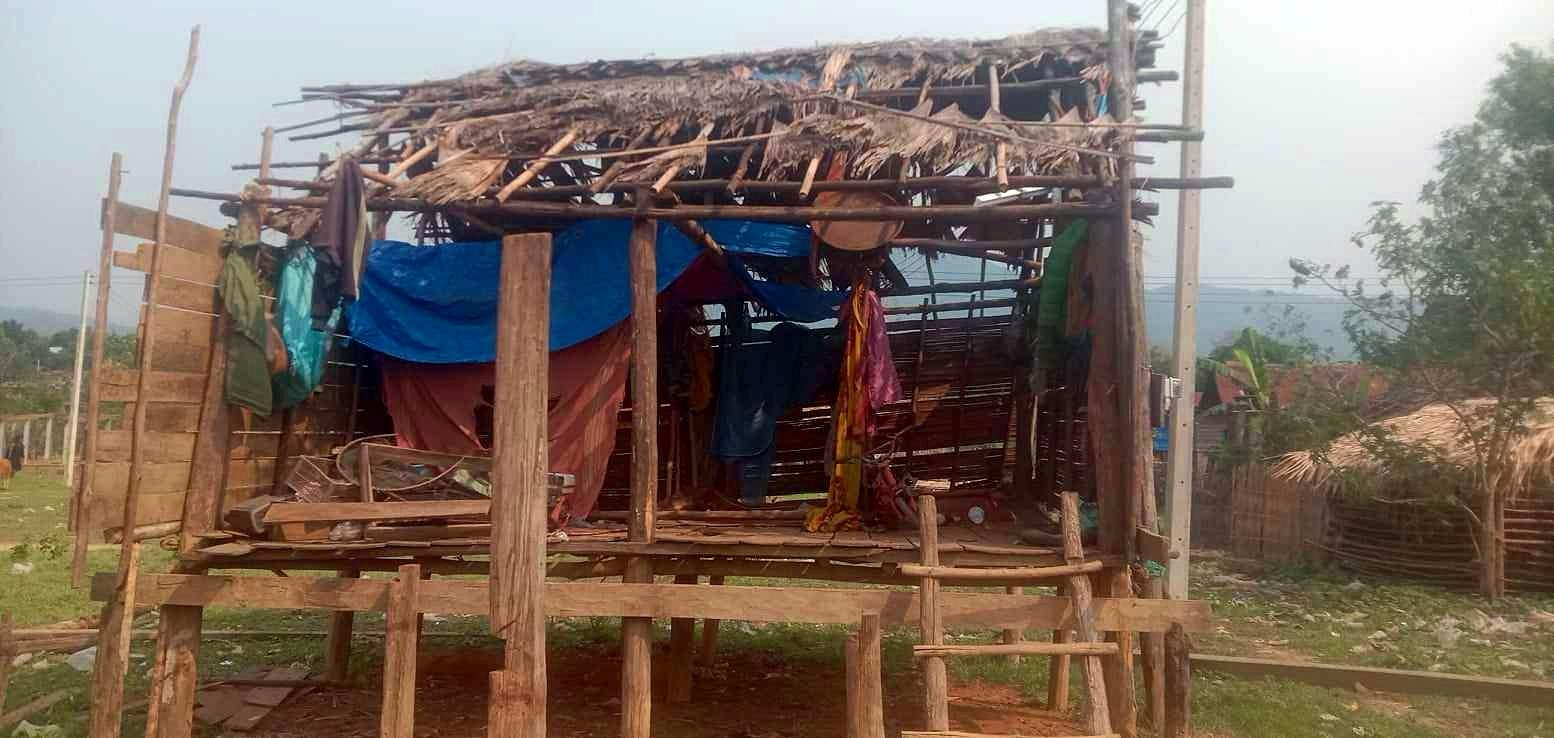
Religious persecution of Christians in Laos, especially among ethnic minority groups, has increased dramatically in recent months. Believers say that local officials have been driving them out of their villages and tearing down and burning their homes and rice silos, which leaves families with no place to go. So far, the government has allowed this to continue and has not brought any charges against the offenders.

Sources close to the police believe Pastor See was killed because of his faith during a time of rapid growth in Laotian churches. The number of baptisms has been causing tension in communities distrustful of a religion they see as foreign. At the same time, Christianity is one of the recognized religions in the country, with Buddhism being the main religion. The communist Lao government allows Christians to conduct services, preach throughout the country, and maintain contact with believers in other nations.


Home Group Prayer

Dear Lord,

We know that you are all powerful and all seeing, and that nothing is hidden from your eyes. We lift the country of Laos up to you, especially those who live in great fear and still continue to follow you.

We pray especially for Brother O, Sister J, and their family. May your angels guard their going out and their coming in. May you protect their home and keep them from any harm. We also lift up Pastor See’s bereaved family and pray for provision and protection for them.

We also lift up those in authority in this country, the police, and others who oversee village activities. May your Holy Spirit touch them to open their hearts to you, and to do the right thing by law.

Let your kingdom come in Laos!
In the name of Jesus,

Amen.

New laws in Vietnam further pressure Christian churches

“He raises up the poor from the dust; he lifts the needy from the ash heap to make them sit with princes and inherit a seat of honor.”

(1 Samuel 2:8a ESV)

The government of Vietnam recently brought Decree 95 into effect, placing local Christian churches under more pressure.

Decree 95 was announced on 29 December and came into effect on 30 March. It effectively allows the government to shut down religious groups for a range of vaguely specified violations by extending some Articles and measures outlined in the 2016 Law on Religion and Folk Belief (LRB).

Vu Chien Thang, deputy minister of Home Affairs and head of the Government Committee of Religious Affairs, had insisted that this prior legislation needed strong enforcement measures.

Essentially, the new law requires all religious groups to register with the government, as well as adding measures relating to the dissolution of religious organizations and religious education institutions, and detailed procedures for receiving and reporting foreign aid. Anyone found in violation of the laws may be sent to compulsory education or rehabilitation centres or subject to temporary detention and even prison sentences.

While the Constitution guarantees the right to freedom of belief and religion, the government requires churches to exist for five years before they can apply for registration. Even when they do register, many house churches are denied, while others have to wait years without any progress.

As a result of these regulatory burdens, many local Protestant house churches simply choose not to register at all, placing them in an even more precarious situation. Lacking legal status, local churches are unable to open bank accounts and must use cash for all their transactions.

Furthermore, for the past 30 years, house churches in Vietnam have been highly dependent on financial aid from international organizations. The new decree will make it significantly more difficult to raise and receive foreign donations, creating more challenges for these churches to continue operating.

Currently Vietnam has 11 legally registered evangelical denominations and many unregistered house churches. While Christians living in larger cities and those with closer relationships with local government officials tend to be able to worship freely, life is more difficult for believers among ethnic minority groups and in rural areas who still face social exclusion, discrimination, and attacks.

Despite the challenges of the new decree, Hien Vu, program manager of the Institute for Global Engagement (IGE) in Vietnam, says pastors and church leaders are determined to continue with their ministries.

“They are used to these restrictions,” Vu commented, describing their attitude as “We’ll deal with it when it comes, but we’ll do whatever God calls us to do.”

Previously, many of the laws relating to religious activities were not strictly enforced. However, with the introduction of Decree 95, the ability for Christians in Vietnam to practise their faith freely and worship together is likely to become much more challenging.

Christians in Vietnam make up 9.7 percent of the population and the communist state is currently ranked 35 in the Open Doors World Watch List of the most difficult countries to be a Christian.


Home Group Prayer

Dear Lord,

We pray for the faithful Christians in Vietnam, particularly those who are members of house churches. We pray that despite the restrictions and challenges they face, they may be able to continue to operate and grow, and spread your Word among the people there.

Give wisdom to the church leaders in their dealings with authorities and provide them with the resources they need to minister to their congregations. Protect all those who trust in you from persecution and discrimination.

In Jesus’ name we pray.
Amen.

Laos: A new wave of persecution

“He raises up the poor from the dust; he lifts the needy from the ash heap to make them sit with princes and inherit a seat of honor.”

(1 Samuel 2:8a ESV)

Laos
(Photo courtesy of a citizen journalist)

Christians in Laos are facing a new wave of persecution. According to eyewitness reports, local officials barged into a house church at Kaleum Vangke village during Sunday service on 5 February and demolished the building. They also burned Bibles and other literature and vandalized the place. Several Christian families from a neighbouring district were visiting the church to hold a joint service when the attack took place.

The church was apparently torn down to instil fear and to stop Christians from practising their faith. There were no injuries during the attack. Local believers have started repairing the church and plan to restart worship services.

A police complaint has been filed, but no action has been taken. This incident comes as anti-Christian attacks are on the increase. The attack took place in southern Laos despite a national law that guarantees the freedom to worship.

Officials from the Ministry of Public Security have warned the village authorities not to harass Christians, but local officials continue to threaten them and have vowed to demolish the church. “We’re not afraid to get together at that house anymore. The experience has made us stronger,” a local believer told Radio Free Asia (RFA).

In the past six months, local officials have been driving believers out of their villages, tearing down and burning their homes and rice silos, leaving families with no place to go. So far, the government has allowed this to continue without any charges being brought against the perpetrators.

Protestants and Catholics, as well as Buddhists, have reported asking for permission to build places of worship and being denied. Eventually, some resort to building without permission. But it is rare that a church built has been later demolished.

Kaleum Vangke village is not new to religious conflict. According to RFA, in March 2020, a pastor named Sithong Thipphavong was arrested at the village and ordered to renounce his faith. When he refused, he was charged and found guilty of causing a social disturbance and breaking village unity. He was jailed for a year and fined 4 million kip (about 200 USD). He was only freed in April 2021. In January of this year, prominent members of the village summoned six Christian families and warned them to stop following Jesus and holding Sunday services. The officials threatened to destroy the church if they failed to comply.

Since 2022, religious persecution, especially among ethnic minority groups, has increased dramatically. The government allows Christians to worship freely at the district and provincial levels, but local officials at the village level are against Christian worship and practices. Most Lao who believe in spirits say that the Christian faith is a western religion that is against their tradition and culture.

Home Group Prayer

Dear Lord,

We thank you for the country of Laos, and the people there who you have loved enough to give your Son for them. We lift up our brothers and sisters in Laos, especially those who have lost their churches and homes in Kaleum Vangke village and have suffered humiliation and great loss at the hands of the authorities.

We ask that you give them beauty for ashes, and a deep assurance of your presence at this time.  Please help them resettle and find a safe place to meet and worship you together with their brothers and sisters. Please give them victory over fear and keep their heads lifted in the presence of those that inhibit their freedom.

We also ask that you bless their persecutors, and those in authority who have the power to restore the church. Please release forgiveness in the hearts of those who have been victimised by them, and please reveal yourself to them too.

Amen.

Bangladeshi Pastor released from prison after 3 months

“Never be lacking in zeal, but keep your spiritual fervor, serving the Lord. Be joyful in hope, patient in affliction, faithful in prayer”

(Romans 12:11–12 NIV)

Pastor Tomal, a local pastor in Bangladesh working for Forgotten Missionaries International (FMI), is free on conditional parole after he was arrested in late November because of a family dispute.

The Supreme Court in the capital city of Dhaka granted Pastor Tomal bail so that he could be released after 3 months of confinement.

Earlier during the dispute, Pastor Tomal was beaten by his father and brother-in-law as they accused him of converting Muslims to Christianity. They pressed charges against him, and he was later arrested by the police and imprisoned.

Subsequently, Pastor Tomal reconciled with his family, and they dropped the charges. However, he was not released and was denied bail twice. He later became aware that local imams had taken the opportunity to file a separate case against him, accusing him of being involved with a local terrorist organization and of being an activist for a political opposition party.

Both Pastor Tomal and FMI deny these accusations and believe they have been fabricated in an effort to keep him incarcerated and prevent him from leading his two local church congregations.

“He is a Christian pastor with absolutely no political affiliations. His only aim is to support the Church and preach the gospel,” says FMI in an official statement.

Despite his situation, in prison Pastor Tomal shared the Gospel with those who might otherwise not hear it.

“Light shines best in the darkness. So if I’m in the prison, this is where I’ll still do ministry, and there’s still hope,” he says.

The pastor, his wife and three children remain in a vulnerable position in the community. While he was in prison, another local pastor has stepped in to help take care of his family and the two church congregations.

Bangladesh is a predominantly Muslim country, and converts to Christianity face a difficult time, with restrictions, discrimination and attacks. Last year, two other pastors in northwestern Bangladesh were charged with “hurting religious sentiments” and trying to encourage Muslims to convert by offering them money, charges they categorically deny. The pastors, who work for the Faith Bible Church of God were released on bail on 17 November, but could each face two years in prison if convicted.

Christians in Bangladesh account for only around 0.3 percent of the total population, or around 500,000 in a country of over 170 million. They mostly live in rural areas and regularly face persecution from Muslim communities and radical groups. In order to worship together, they are often forced to meet in underground house churches.

Home Group Prayer

Dear Lord,

We pray for your persecuted church in Bangladesh and ask that you will protect them from harm and strengthen them in their times of trial.

We particularly pray for Pastor Tomal and his family as he readjusts to home life after prison.  We pray that his regular church ministry will be resumed and he will be still able to disciple the six men who have given their lives to Jesus and are serving out their prison sentences. 

Give Pastor Tomal a sense of your presence, protect him and embolden him to remain full of faith and hope. And allow him to still share the good news of the Gospel and bring others into relationship with you.

In Jesus’ name we pray.

Amen.

Afghanistan: Believer forced to recant

“The Lord is with me; I will not be afraid. What can mere mortals do to me? The Lord is with me; he is my helper. I look in triumph on my enemies…..
Give thanks to the Lord, for he is good; his love endures forever.”

(Psalm 118:6-7, 29)

The Taliban are continuing their crackdown on Afghan Christians and especially those who do not adhere to the government’s harsh and strict interpretation of Sunni Islam. For most Afghan Christians, following Jesus is a death sentence. Fear dominates the country and believers cannot practise their faith openly. They face dire consequences, including disownment, torture, being forcibly sent to a psychiatric hospital, or even death if they are discovered.

Two weeks ago, the Taliban arrested a Christian and jailed him. According to local sources, the police beat him in prison and forced him to recant his Christian faith. He was forced to share the names and phone numbers of other Christians he was involved with in the country.

Sources also say the Taliban has been monitoring suspected Christian leaders and finding out their homes and work addresses. There have also been accounts of the Taliban going door to door seeking out Afghan Christians. Others have received letters from the militants, threatening them and their families. Christian converts have also been receiving threatening phone calls. Some Christians have turned their phones off for fear of being discovered and have moved to undisclosed locations.

According to Sharia law, conversion from Islam to another religion is considered shameful and punishable by death. Afghanistan has a small number of Christians, mostly Afghan believers. The country is ninth on the Open Doors World Watch List, making it a place of extreme persecution.

Meanwhile, the Taliban’s Ministry for the Promotion of Virtue and Prevention of Vice has arrested dozens of women who failed to observe the strict dress code in the streets of the capital city, Kabul. They have been taken to unknown locations. A spokesperson for the Ministry referred to this violation of the rule as “bad hijab” and warned women they would continue tracking down offenders. Women are not allowed by the Taliban to visit public parks, gyms or bathhouses, and a close male relative must accompany them for long road trips.

As previously reported, in September 2023, the Taliban detained at least 20 people, including an American surgeon, in a fresh crackdown on international aid agencies. The International Assistance Mission (IAM) offices in Ghor, central Afghanistan, were raided and the non-profit organization accused of using aid to spread Christianity. IAM said the detention took place on two separate occasions in September. IAM has operated in Afghanistan since 1966.

Prayer points:

  • Pray for the protection of secret believers and that God’s close presence will bring peace, joy, and hope to their hearts.
  • Pray for opportunities for believers to gather secretly, and have all their physical, emotional and spiritual needs met.
  • Pray that the Holy Spirit will soften the hearts of the Taliban leaders towards women and religious minorities.
  • Pray that those who have fled to neighbouring countries will be led to places where all their needs are met.