
Nepal: Foreign visitors detained for alleged illegal religious activities

“We are afflicted in every way, but not crushed; perplexed, but not driven to despair; persecuted, but not forsaken; struck down, but not destroyed.”
(2 Corinthians 4:8–9 ESV)

Local authorities in Nepal  arrested twenty-four South Korean at a Bible college near the border with India. The group was attending a workshop at the Nepal New Covenant College (NNCC). Local police acted on a complaint alleging involvement in illegal religious activities, claiming they were executing “orders from above”.

Morang district police chief, Superintendent of Police Kabit Katwal, stated that the visitors had violated tourist visa regulations and the case was transferred to the Department of Immigration in Kathmandu for further investigation.

Under Nepalese law, foreign nationals on tourist visas are strictly prohibited from preaching, conducting missionary work, or engaging in organized religious activities.

NNCC Principal, Sarad KC, rejected the allegations. He clarified to police that the visitors were not preaching or sharing the gospel publicly with the intention of proselytizing; rather, they were simply participating in a private gathering with local believers inside the college.

Established in 2013 as a non-denominational institute supported by a South Korea-based Christian organization, NNCC provides higher theological education ranging from certificates to doctoral degrees.

Local Christian leaders described the police action as unwarranted, calling it a violation of religious freedom and evidence of growing hostility toward Christians in Nepal. The Federation of National Christian Nepal announced plans to raise the issue nationally and internationally to draw attention to the increasing scrutiny of religious minorities. Meanwhile, South Korea’s Ministry of Foreign Affairs confirmed it has been in touch with Nepalese authorities to provide consular assistance.

Critics note that Nepal’s anti-conversion laws are applied selectively—reconversion to Hinduism is often welcomed, whereas Christian evangelism is effectively criminalized. Offenders face up to five years in prison and fines of up to 50,000 Nepalese rupees (approx. 330 USD) for coerced conversions or propagating faith that undermines another religion.


Group Prayer

Lord Jesus, we bring before you these 24 Korean nationals. We pray for their safety, comfort, and swift release. Soften the hearts of those in authority, and use the right leaders to step in on their behalf. Grant your grace, protection, and peace upon your people during this trial. In Jesus’ name. Amen.

印度:新反改教法實施 信徒憂慮加劇

「……我只有一件事,就是忘記背後,努力面前的,向著標竿直跑,要得神在基督耶穌裡從上面召我來得的獎賞。」 腓立比書 3:13–14

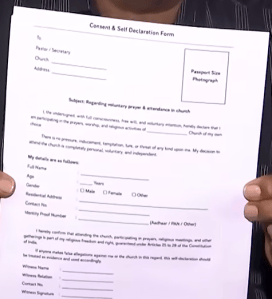
印度馬哈拉施特拉邦(Maharashtra)新近頒布的反改教法(Anti-Conversion Law),嚴重加劇該邦首府孟買基督徒社群的憂慮。為防範法律風險,當地牧者、社區領袖及律師共同擬定了自願參與聲明書,讓教會會眾簽署,聲明他們出席崇拜聚會「完全是個人、自願和獨立的抉擇」。

《2026年馬哈拉施特拉邦宗教自由法案》(Dharma Swatantrya Adhiniyam / Maharashtra Freedom of Religion Bill)於今年3月在馬哈拉施特拉邦議會兩院通過,並獲印度總統德拉帕迪・慕爾穆批准,於8月28日正式生效。該法例旨在打擊涉嫌透過脅迫、欺詐、誘導或其他不法手段促使任何人改變宗教信仰,而法案亦同時適用於跟婚姻或婚姻承諾相關的改信情況。

馬哈拉施特拉邦現時已加入印度另外 12 個已設有類似反改教法的邦,包括:阿魯納恰爾邦(Arunachal Pradesh)、恰蒂斯加爾邦(Chhattisgarh)、古吉拉特邦(Gujarat)、哈里亞納邦(Haryana)、查謨-克什米爾/喜馬偕爾邦(Himachal Pradesh)、賈坎德邦(Jharkhand)、卡納塔克邦(Karnataka)、中央邦(Madhya Pradesh)、奧里薩邦(Odisha)、拉賈斯坦邦(Rajasthan)、烏塔拉坎德邦(Uttarakhand)以及烏爾代布爾/北方邦(Uttar Pradesh)。

該法規定任何想改變宗教信仰的人士,必須於60日前申請並獲批,隨後成功獲批人士亦須在25天內完成登記,否則批准將被視為無效。

違法者最高可被判監七年和罰款 100,000 盧比(約 1,000 美元)。重犯者最高可被判監十年。證明無罪的舉證責任完全落在被指控慫恿或煽動改信的人身上,而所謂「受害者」的親屬或相識人士均有權提出控告。

在該法正式生效前不久,孟買至少有4,000間教會要求出席者簽署聲明書,確認他們是出於自願且在沒有任何利益誘因下參與教會崇拜。聲明書中明確指出,參加祈禱聚會的人是出於自己的「選擇」,沒有受到「任何形式的壓力、脅迫、誘導、利誘或威嚇」。

聲明書要求出席者提供全名、照片、住址、聯絡電話,以及可核實的政府身分證明文件號碼,並由出席者及見證人共同簽署。對部分改信者而言,聲明書被視為或許可保障他們免因信仰而遭受潛在騷擾。信徒們現已透過社交媒體和影印將聲明書廣泛流傳,部分教會甚至安裝了閉路電視以析別參與聚會人士,並在發生事故的時候可作舉證用途。

馬哈拉施特拉邦基督教發展協會(Maharashtra Christian Development Association)主席德夫丹・崔布凡牧師(Pastor Devdan Tribhuvan)表示,引入簽署聲明書的做法是基於早前令人關注和憂慮的經歷,就是祈禱會不時發生涉及印度教極端組織巴蘭達爾(Bajrang Dal)的受襲事件。他表示:「過去曾發生巴蘭達爾成員強行闖進祈禱會,襲擊會眾和牧者,並毀壞教會器材。當這些衝突發生時,我們得不到警方支援。」

自印度教民族主義政黨印度人民黨(Bharatiya Janata Party, BJP)於2024年11月的馬哈拉施特拉邦議會選舉大勝以來,針對基督徒的襲擊事件明顯增加。在今年4月至7月期間,警方已錄得9宗基督徒受襲事件。教會領袖認為實際數字遠高於此,他們相信有許多襲擊事件並沒有向警方舉報。


小組禱告

天父,今天當馬哈拉施特拉邦的人民面對政局與法規改變時,我們將他們交在祢手中。我們為祢的子民禱告,求祢幫助他們面對恐懼、沮喪,以及對不實指控和警方干預的憂慮。我們知道某些宗教團體會擾亂基督徒聚會、恐嚇會眾,並私下進行調查,求祢保護祢的子民免受傷害。在新法生效時,求祢堅固教會並打開福音之門。我們求主保守馬哈拉施特拉邦的信徒,讓他們忠心地勇於分享耶穌基督為世人帶來的永恆盼望。無論他們在職場、社區或村中,求祢賜他們膽量為祢作鹽作光,以生命彰顯基督,並繼續追求真理。 阿們。

India: New Anti-Conversion Law Raises Fears of Persecution

“…But one thing I do: Forgetting what is behind and straining toward what is ahead, I press on toward the goal to win the prize for which God has called me heavenward in Christ Jesus.” Philippians 3:13-14 (NIV)

A newly introduced anti-conversion law in the Indian state of Maharashtra has caused growing anxiety among Christians in the state capital, Mumbai. In response, churches have begun asking worshippers to sign self-declaration forms stating that their choice to attend services is “completely personal, voluntary, and independent.” These forms were drafted by pastors, community leaders, and lawyers as a precautionary step.

The Dharma Swatantrya Adhiniyam (Maharashtra Freedom of Religion Bill) 2026, was passed by both houses of the Maharashtra state legislature in March, approved by President Droupadi Murmu, and officially came into effect on 28 August. The law is aimed at alleged religious conversions carried out through coercion, deception, inducement, or other banned methods. It also applies to conversions connected with marriage or promises of marriage.

Maharashtra now joins 12 other Indian states that have similar anti-conversion laws: Arunachal Pradesh, Chhattisgarh, Gujarat, Haryana, Himachal Pradesh, Jharkhand, Karnataka, Madhya Pradesh, Odisha, Rajasthan, Uttarakhand, and Uttar Pradesh.

Under the anti-conversion law, anyone wishing to change their religion must provide 60 days’ notice and secure approval from the government. The conversion must then be registered within 25 days or be null and rendered void.

Those found guilty of breaking the law may face prison sentences of up to seven years and fines of 100,000 rupees (approximately US$1,000). Repeat offenders could receive prison terms of up to ten years. The responsibility to prove innocence rests with the person accused of encouraging or inciting conversion, and complaints may be submitted by a relative or acquaintance of the alleged “victim”.

Shortly before the law came into force, at least 4,000 churches in Mumbai took the unusual step of asking attendees to sign declarations confirming that they were participating in services voluntarily and without any inducement. The self-declaration states that the individual is attending the prayer meeting by their own “choice” and is under “no pressure, inducement, temptation, lure, or threat of any kind.”

The form asks for the attendee’s full name, photograph, residential address, contact phone number, and a verifiable number from a government-issued identity document. It must be signed by the attendee and countersigned by witnesses. For some converts, the forms are seen as a safeguard against possible harassment over their faith. Believers have circulated the form through social media and photocopies. Some churches have also installed CCTV cameras to identify individuals and preserve evidence if any incident occurs.

Pastor Devdan Tribhuvan, president of the Maharashtra Christian Development Association, said the forms were introduced because of concerns after incidents at prayer meetings involving the Hindu extremist group Bajrang Dal. “In the past, there have been incidents where Bajrang Dal members have forced their way into prayer meetings, assaulted worshippers and pastors, and vandalised church instruments. We did not receive police support when these disputes occurred,” he said.

Since the Hindu nationalist Bharatiya Janata Party won a sweeping victory in the Maharashtra state elections in November 2024, attacks on Christians have increased. Between April and July this year, police recorded nine such attacks.  Church leaders believe the true figure may be significantly higher, as many incidents are not reported.


Group prayer

Father, we bring the people of Maharashtra to you today as they navigate the changes in the state. We pray for your people as they battle fear, depression and worry about the false accusations and police interference. We also pray for protection against the self-appointed religious groups who are disrupting meetings, intimidating worshippers and conducting parallel investigations. Strengthen your Church and open doors for the gospel, as the new law takes effect. We pray that believers in Maharashtra would remain faithful and courageous as they share the hope of Jesus Christ. Give them boldness to be salt and light in their places of work, community and villages and stand firm in their witness and pursue the truth. Amen.